BALA Technology has provided emergency radios to its employees as a measure to help them prepare for and cope with disasters.
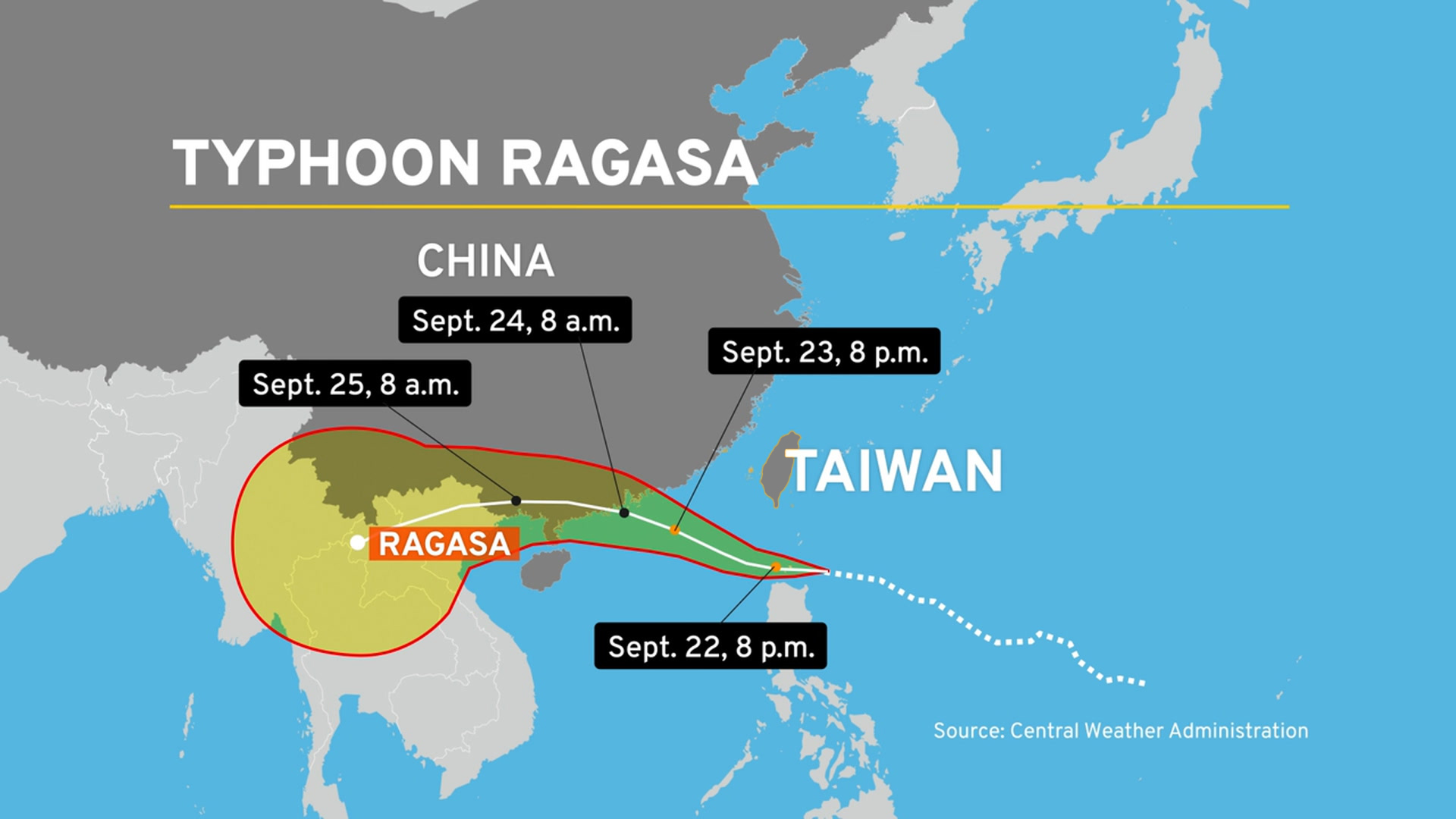
China’s National Meteorological Center continued to issue an orange typhoon warning at 6:00 on September 23. Typhoon Ragasa (Super Typhoon Level), the 18th typhoon of this year, is approaching with significant threat.
Typhoon Ragasa’s Impact Spans Multiple Regions
Typhoon Ragasa’s influence extends far beyond Guangdong’s coast:
- Philippines: At 15:00 local time on September 22, Ragasa made landfall on Panuitan Island in northern Philippines as a super typhoon, then gradually moved away from the Babuyan Islands in northern Philippines. However, strong winds and heavy rainfall triggered a landslide on a highway in Benguet Province, Luzon Island, burying 4 moving vehicles, resulting in 1 death and 7 injuries. Government agencies and schools in Metro Manila and 29 provinces across the country were closed, and over 10,000 people were evacuated and resettled in northern and central Luzon.
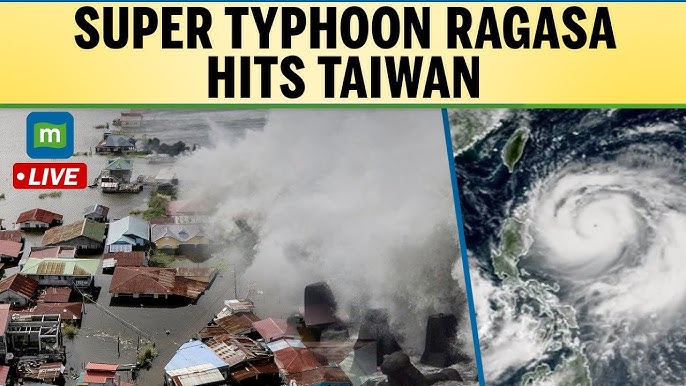
- Taiwan: Ragasa’s storm circle has hit the Hengchun Peninsula. Taiwan’s meteorological authority stated that the typhoon’s circulation continues to bring heavy rainfall, with increasingly intense downpours in the mountainous areas of Huadong and Pingtung. Heavy rain is also highly likely in the Greater Taipei Area, Yilan, and multiple mountainous regions. Strong winds and rain have already affected eastern Taiwan—monitoring data shows that from 8:00 on September 22 to 6:00 on the 23rd, parts of central and eastern Taiwan experienced heavy rain or torrential rain, with extremely heavy rain in some local areas of the east.
- Guangdong Province: According to data from Guangdong’s Emergency Management Department, as of the morning of the 23rd, 13 cities in Guangdong had activated a Level III or higher typhoon emergency response. A total of 216 coastal primary and secondary schools and kindergartens were closed, 37 port enterprises suspended operations, 28,000 fishing boats returned to ports for shelter, and various emergency supplies were being rushed to coastal districts and counties.


(BALA Technology has provided emergency radios to its employees as a measure to help them prepare for and cope with disasters.)
Emergency Radios: A Lifeline in Communication BlackoutsUnder the threat of extreme weather brought by Typhoon Ragasa, the risk of emergencies such as traffic disruptions, power outages, and mobile signal failures has risen significantly. Historical data shows that among the 16 strong typhoons that hit Guangdong between 2011 and 2023, 12 caused local communication outages, with an average outage duration of 4.2 hours (the longest reached 11 hours during Typhoon Ma-on in 2022).
In such scenarios, emergency radio broadcasts are the only reliable channel for continuous dissemination of authoritative information—including typhoon track updates from meteorological departments, evacuation orders from the government, and contact information for rescue teams. At this point, a reliable emergency radio becomes a “critical link” for safeguarding lives.
BALACN Emergency Radio: Proven Reliability in Disasters
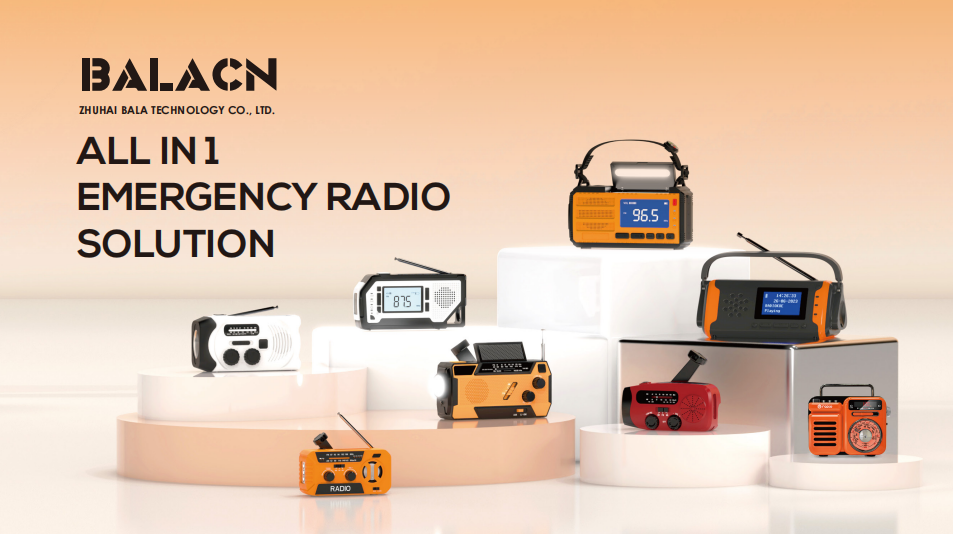
The practicality of BALACN emergency radios has been verified in multiple disaster rescue efforts:
- During the 2011 severe typhoon in Wenzhou, 32 disaster-stricken towns were cut off from information due to power and communication outages. However, emergency radios (including BALACN devices) ensured that 87% of stranded people received evacuation notices in a timely manner, increasing the evacuation efficiency by over 50% compared to areas without such devices.
Its core advantages are tailored to disaster scenarios:
- One-key frequency locking: A dedicated button locks local emergency broadcast frequencies in less than 10 seconds—far faster than the average 2-minute tuning time of ordinary radios.
- ** Dual power supply**: “Dry battery + hand-cranking” mode. One minute of hand-cranking supports 3.5 hours of continuous listening. During the 72-hour large-scale power outage caused by Typhoon Nuri in Zhanjiang in 2020, this function helped 62% of users maintain access to information.
- Integrated safety features: Short-range lighting (3-5 meters) and long-range alarm (effective within 100 meters). During typhoon rescue efforts in Hainan in 2022, these features assisted rescuers in locating 17 trapped people.
BALACN’s Corporate Social Responsibility in Disaster Relief
Beyond product performance, BALACN has actively fulfilled its social responsibility in extreme weather rescue:
- During the catastrophic floods in Zhengzhou in 2021, it donated over 3,000 emergency devices (including radios and flashlights), covering 6 of the most severely affected districts and counties, and ensuring information access for 12,000 people.
- In 2022, it participated in Mozambique refugee relief efforts; in 2023, it supported the UNDP (United Nations Development Programme) relief mission in Libya. The emergency equipment provided in these projects increased the efficiency of disaster information dissemination in local communities by 40%, practicing the concept of “protecting lives through technology.”
Facing Typhoon Huajiasha today, whether for people taking shelter at home in the Philippines, Taiwan Region of China, or Guangdong, or for staff on the frontlines of flood prevention, an emergency radio is an indispensable “safety tool.” It may not be the most eye-catching emergency supply, but in critical moments of communication blackouts, it becomes a “lifeline” connecting people to the outside world—providing tangible protection for typhoon defense.



